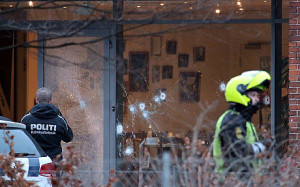
Not more than a month past the ghastly attacks on Charlie Hebdo on January 7, Denmark suffered an imitative attack in much the same vein this morning. A lone gunman this time shot up a Danish cafe where a freedom of speech was being held. The target is ostensibly Lars Vilk, a controversial Swedish artist who’s been the subject of multiple death threats for his caricaturization of the prophet Muhammad. As of writing, a 40 year-old man was killed while three policemen were injured. The gunman remains at large.
These attacks are inexcusably abhorrent, yet the surge in Islamophobia that follows them is in its own way nauseating. Far right political parties across Western Europe are gaining in influence: they run primarily off the platforms of anti-immigration and Euroskepticism, and they are becoming increasingly Islamophobic. The Copenhagen and Charlie Hebdo shootings only exacerbate this. The default human reaction to such senseless violence is to swing away in reactionary outrage. It’s hardly the height of political science to suggest that the national moods in Denmark and France at this moment may in unpropitious for any serious dialogue about the issue. Yet it’s perhaps the single most intimidating and urgent domestic issue that confronts Europe today — how, indeed, do you handle immigration?
How does is all this germane to International Relations? We learn early on in Introduction to International Relations classes that domestic level variables can affect the systemic. Should the far right parties in Europe get a stronger hold on the levers of power, then European foreign policies are likely to change in turn: how a far right Europe might approach the war against ISL, how it would have approached the problems in Libya, the civil strife in the Africa are all interesting questions worth pondering.
Photo credits belong to the Telegraph.


![An Israeli police officer detains a Palestinian protester in East Jerusalem [Photo Credit: Reuters/Ammar Awad]](../../../wp-content/uploads/2015/11/pic2-50x50.jpg)