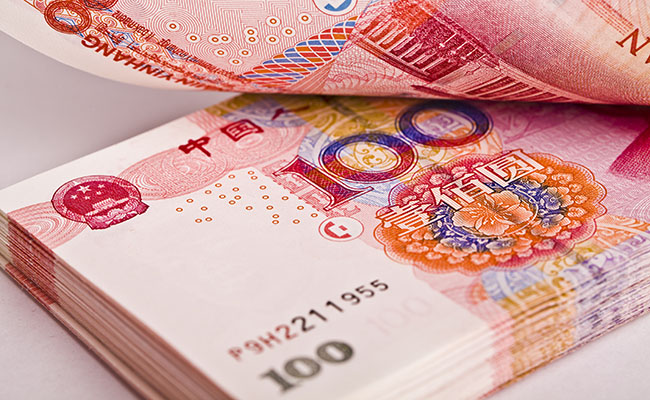
 On November 30, 2015, the International Monetary Fund’s executive board announced the decision to include China’s Renminbi into the Special Drawing Right Basket (SDR), effective October 2016.
Created by the IMF in 1969 in the context of the Bretton Woods fixed exchange rate system, SDR is an international reserve asset that helps its holder obtain “freely usable currencies of IMF members”. Before the inclusion of Renminbi, the SDR basket originally consisted of four currencies with various weights: U.S. Dollars (41.9%), Euro (37.4%), British Pound (11.3%) and Japanese Yen (9.4%). Starting next October, this structure would change to U.S. Dollars (41.73%), Euro (30.93%), British pound (8.0%), Japanese yen (8.33%) and Chinese Renminbi (10.92%), The greatest decrease in weight to account for the Renminbi’s inclusion come from the Euro and Pound’s shares; the U.S. Dollar is barely affected. According to the current SDR valuation method set in 2000, every 5 years the Executive Board would review the SDR currency basket unless “developments in the interim justify an earlier review. ” During previous review, conducted in 2010, the Executive Board’s conclusion was that the four currencies (U.S. Dollar, Euro, British Pound and Japanese Yen) would continue to comprise the SDR basket. In 2010, Chinese Renminbi, although by then already the 3rd largest in exportation quantity in the world, was denied the entrance into the SDR basket due to its failure to act as a “freely usable currency”. Now, in the 2015 review, the IMF Executive Board has observed the substantial increase of Renminbi’s usage in the international trade market. It has agreed to acknowledge the Chinese Renminbi as “freely usable currency”. Since the Chinese Renminbi now meets both SDR inclusion criteria (the export criterion and the “freely usable” criterion), the Executive Board further agrees that the Renminbi be added to the SDR currency basket as the fifth currency. This decision will be effective starting October 2016 in order to “provide sufficient lead time for the Fund, its members and other SDR users to adjust to these changes”. “The Executive Board’s decision to include the RMB in the SDR basket is an important milestone in the integration of the Chinese economy into the global financial system. It is also recognition of the progress that the Chinese authorities have made in the past years in reforming China’s monetary and financial systems. The continuation and deepening of these efforts will bring about a more robust international monetary and financial system, which in turn will support the growth and stability of China and the global economy,” said Ms. Christine Lagarde, the Managing Director of IMF, on the press release meeting. Indeed, the inclusion of Renminbi into SDR will help to accelerate Beijing’s financial reforms while bringing China more opportunities in international trade, as well as diplomatic prestige with developing countries. It will also strengthen China’s recent effort of establishing the Asian Infrastructure Investment Bank, which is dedicated to help countries in Asia with their development of infrastructure.
While in the short run the influence of the inclusion of Renminbi might not be significant, it marks a huge step the Chinese government has taken towards a more liberalized market. In order to meet the “freely usable” criterion to join the SDR basket, Beijing has adopted a wide range of policies in the past 5 years. These include a freer interest rate, expanded Renminbi trading hours, more frequent debt issuance, and liberalization of access to the onshore fixed-income and foreign exchange markets. “The Renminbi’s inclusion into the SDR basket requires China to take on more responsibilities in the global economy. China will not slow down its pace of pushing reforms in its financial system,” according to Mr. Yi Gang, the vice president of People’s Bank of China, China’s central bank. He also added that one should not expect the exchange rate for Renminbi to fall rapidly after the announcement since the IMF’s valuation method for SDR currency does not include evaluating the value. There are also no grounds for Renminbi’s depreciation. However, “in case of extreme fluctuation in Renminbi’s exchange rate, the interference of the central bank should still be expected.” While the Chinese government has taken steps in reforming other sectors of its economic systems, emphasize on Renminbi’s stability has resulted in an even stronger central control over exchange rate, which will not seem to change in the short-run.
As IMF indicates its faith in Renminbi’s future, it is expected that in the short run the demand for Renminbi will rise, causing the exchange rate for Renminbi in offshore market to rise as result. However, this does not mean that Renminbi is ready to replace the U.S. Dollar as the preeminent reserve currency. Renminbi makes up 12.1% percent of the foreign trade in Hong Kong, this percentage is only 0.9% in London and even smaller in North America. “The Chinese government is still working on further freeing up Renminbi as next October is approaching, ” said Mr. Zhu Min, the Deputy Managing Director of IMF who is also a Chinese economist.
In conclusion, the meaning of the Renminbi’s inclusion into SDR basket is more symbolic than substantial. Although Renminbi still has a long way to go before being able to compete with currencies like Euro and U.S. Dollar, it is without doubt that inclusion has marked a historical milestone for Renminbi.
Reference:
Krista Hughes, “IMF gives China’s currency prized reserve asset status”, Reuters, Dec 1, 2015, http://www.reuters.com/article/us-imf-china-idUSKBN0TJ24Q20151201#23qJU7mtMGzpjaLD.97
Jeff Sommer, “China Steps Up, but Its Currency Still Has Dues to Pay”, The New York Times, Dec 5, 2015, http://www.nytimes.com/2015/12/06/your-money/china-steps-up-but-its-currency-still-has-dues-to-pay.html?_r=0
Ariel Noyola Rodríguez, “China’s Yuan will be the Third Most Powerful Currency in the IMF Basket”, Global Research, Dec 8, 2015, http://www.globalresearch.ca/chinas-yuan-will-be-the-third-most-powerful-currency-in-the-imf-basket/5494425
Ian Talley, “China Joins World’s Elite Currency Club”, The Wall Street Journal, Nov 30, 2015, http://www.wsj.com/articles/imf-lifts-chinese-yuan-to-elite-lending-reserve-currency-status-1448903067
“Chinese Renminbi to Be Included in IMF’s Special Drawing Right Basket” The International Monetary Fund, Dec 1, 2015, http://www.imf.org/external/pubs/ft/survey/so/2015/NEW120115A.htm


