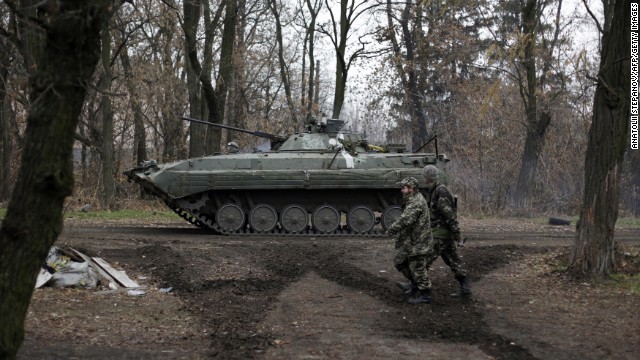
It has been a long and grueling road for Ukraine since the Euromaiden Revolution began a year ago. On the nights of November 21 and 22 several thousand protesters gathered in Kiev’s Independence Square to protest the suspension of the Association Agreement with the EU. One year later, Crimea has essentially become Putin’s newest territory. Russian funded separatists are fighting to keep control over the eastern Donbass regions, and wreckage from the tragic shoot down of Malaysian Airline’s Flight 17 is finally being taken back to the Netherlands for examination. There was a chance for peace when a ceasefire deal was signed in September, but even that is showing signs of breaking down. According to the latest UN report released this month on the human rights situation in Ukraine, over four thousand lives have been lost since separatist actions began in April, 957 since the September ceasefire. A further 800 thousand people have been classified as displaced persons within Ukraine or as refugees who have fled abroad.
When the Keck Journal first covered the Ukraine crisis in March, Russia had just occupied Crimea. Eight months later, troops and military supplies are flowing from Russia into the war-torn Donbass region and ending up in the hands of separatists. Russian President Putin has consistently denied helping Ukrainian separatist and providing military equipment, placing the blame for conflict, including the crash of Flight 17, onto Ukraine. In fact, when Canadian Prime Minister Steven Harper privately told Putin to “get out of Ukraine” in this week’s G-20 Brisbane Summit, Putin’s apparent response was “That’s impossible since we are not there.”
On the bright side, though it may not be apparent in light of the increased movement of arms and vehicles into Donbass from Russia, economic sanctions against Russia are working. Coupled with a universal decrease in the price for oil, now at an average four year low, Russia’s economy is taking a hit that may send it into recession. The rouble has depreciated by 30% since the beginning of this year and inflation is increasing while economic growth is not expected to occur for the next two years according to Russia’s central bank. Even though it appears that Putin still intends to continue his adventurism in the Ukraine, as seen by his constant denials and recent military movements, eventually he will have to face growing economic problems at home. In the meantime, Ukraine will have to weather the next round of conflict on its borders and clean up corruption through needed reform at home.
Ukrainian Crisis Timeline: http://www.bbc.com/news/world-middle-east-26248275
Fears Over Resuming Conflict: http://www.bbc.com/news/world-europe-28969784
A Look at Russia’s Economy: http://www.economist.com/news/leaders/21633813-it-closer-crisis-west-or-vladimir-putin-realise-wounded-economy
Full UN Report on Human Rights in Ukraine, 15 November 2014: http://www.ohchr.org/Documents/Countries/UA/OHCHR_seventh_reportUkraine20.11.14.pdf
Photo Credit: Anatoli Stepanov/AFP/Getty Images
Aaron Yang

Aaron is a freshman from Chandler, Arizona and is interested in International Relations and hopes to focus in East Asia. He is also a passionate fan of Doctor Who, Sherlock, House of Cards, Game of Thrones, and Code Geass. If you see him on campus, bring him a boba and you'll get lots of love!
![Migrants at a train station in Dortmund, Germany. [Photo Credit Times of Israel/AP Photo/Martin Meissner]](https://keckjournal.com/wp-content/uploads/2015/09/Germany-Migrants_Horo-4-635x357-50x50.jpg)

