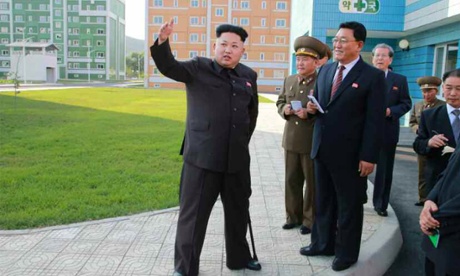
With each passing day, the world’s media has thrown increasing spotlight on the alleged disappearance of Kim Jung-un – the leader of North Korea. The concern – and hope – regarding Kim’s adverse state of health rose when Kim was found absent at a number of parliamentary sessions, but it really escalated with Kim’s absence from the North Korean Workers’ Party’s 69th anniversary and its following festivities, a national holiday.[1] When Kim reappeared on television after weeks, he was sporting a walking stick. Speculations ranged about Kim’s health, from a sprained ankle to severe diabetes. To be sure, there was ample reason to believe any of these rumors, given Kim’s affluent lifestyle – a smoker, an avid customer of luxury good items, and the dictator of North Korea. With Kim back in place, the real question is how much Kim’s illness affects his ability to rule over other power figures in the government, including the military leadership that made a surprise visit to South Korea at the closing ceremony of the 2014 Asian Games. While Kim Il-sung, the founder of North Korea and Jung-un’s grandfather is widely accepted as a deity-like figure, it is not as clear on how much heartfelt support Kim Jung-un is getting. Neither of the prior Kims enjoyed the luxury of shirking official duty with illness; Kim Jong-il was reported by the North Korean national media to have made appearances at various sights around North Korea even until weeks before he died.[2] The fact that Jung-un has exhibited various visible signs of health deterioration so early in his dictatorial career also casts doubt on his ability to hold on to political hegemony in his regime.


