When the State Department announced a few weeks ago it had cleared Egypt to receive military aid, all sides voiced their opinion. Some praised the administration’s efforts to cooperate with the Egyptian government, but many criticized the decision to restore aid amidst major human rights abuses.[1][2] The Keck Journal’s own Jenya Green wrote recently about how the US should withhold aid until Egypt’s government shows signs of progress.[3] But most of the discussion thus far has focused on the implicit message sent by resuming aid, instead of the possible consequences of doing so. The aid package consists of ten Apache military helicopters, to be used for counterterrorism operations in the Sinai Peninsula.[4] But arming the military even further without a comprehensive strategy to address instability in the Sinai risks exacerbating the conflict, and worsening life for civilians in the area.
It is important to understand the history of the Sinai before delving into the effects of aid policy on the region. The Sinai peninsula is in northeastern Egypt, separating the mainland from Israel. It is home to half a million Egyptians, including a large number of native Bedouins, and Palestinian immigrants.[5] Following many conflicts between Egypt and Israel over the Sinai in the 1960s and 70s, the two countries agreed to make the region a buffer zone. The peninsula would remain demilitarized, only allowing Egyptian military forces to intervene if both Egypt and Israel would allow it. While this buffer zone was in many ways an excellent way to reduce the threat of geopolitical brinksmanship, over time the area has deteriorated and become a haven for transnational crime.
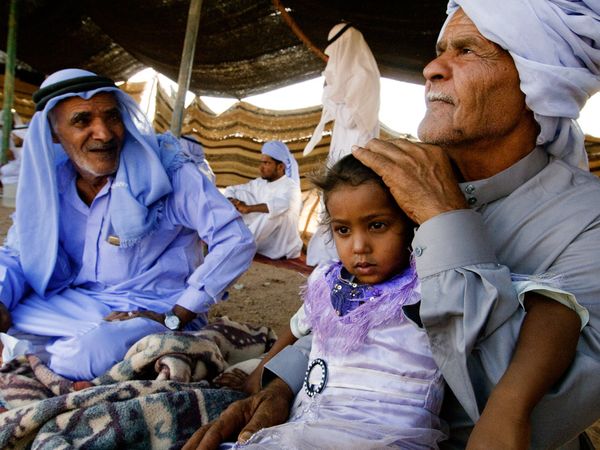
The Bedouins were greatly marginalized under the rule of former dictator Hosni Mubarak. Mubarak began development projects in the Sinai, focusing on tourism in the South, and agricultural development in the North.[6] But little of the benefits from these projects reached the Bedouins. For years, the Bedouins were systematically excluded from economic development and tourism projects in the region. In the South, the tourism industry grew rapidly, with 24% of hotel rooms in Egypt being located in the Sinai by the year 2000, and with tourism now comprising 11% of the country’s GDP.[7][8] But to create this industry, the Bedouins were cast aside from the land they had owned for centuries. Migrant laborers from the Nile Valley were brought in to fill most of the jobs created by the boom, while the Bedouins were barred from employment, with the exception of security guard and day laboring positions.[5][7] Migrant workers were given preferential access to resources, while Bedouins were routinely denied access to water and basic services, as well as the right to hold land, to participate in the military, and even to gain citizenship.[5][9] A 2010 government report found that more than 25% of the Sinai population lack a national ID.[8] Without citizenship, individuals cannot access schools, hospitals, and other basic services. In fact, “Without official documents proving Egyptian nationality you cannot register with an NGO to access services. Often children can’t register for injections against diseases,” according to Hanan Moqaibid, a female Bedouin activist from North Sinai’s Bayadeiya tribe. [8] With no connection to a formalized economy, smuggling and narcotics have become some of the only means of income for many Bedouins.[10]
Bedouins also claim they are constantly seen through a prism of security threats. Following a bombing in the Egyptian city of Taba in 2004, Egyptian security forces arrested and jailed nearly three thousand people without charge or due process, including hundreds who were arrested solely to obtain the surrender of their family members.[11] Interviews of detainees conducted by Human Rights Watch found widespread reports of torture and abuse by Egypt’s State Security Investigation service. These practices continued even after authorities said they had found the individuals responsible for the attack. In 2005, another bombing occurred in Sharm el-Sheikh, a city in southern Sinai. The explosion killed 88 people and injured 200 more.[12] The government blamed Bedouin militants for the attacks, but recent documents may indicate otherwise. In early 2011, Der Spiegel reported that government documents had surfaced indicating the Egyptian government’s possible role in orchestrating the attack.[13] The documents have not yet been authenticated, but should they be true, they only substantiate the belief that Bedouins have become a scapegoat for the Egyptian government.
Recent history has led to rapid change in the region. The Arab Spring brought hope to many in Egypt, but it only served as catalyst to violence and instability in the Sinai. The regime’s collapse led to police forces withdrawing from the peninsula, and focusing their attention elsewhere. In that time, an influx of weapons from various countries made their way to the region, and bursts of violence began.[5] Militants attacked gas pipelines, police stations, and even took tourists and police as hostages.
It is important at this juncture to discuss the changing nature of the militancy in the Sinai. In 2007, Bedouin protests mostly consisted of peaceful sit-ins and protests.[14] When attacks began in 2011 and 2012, many called the Sinai insurgents “Islamic radicals,” “Jihadis,” or “Salafists”. But the goals of the insurgency were not inherently religious. Indeed, Sinai insurgents kidnapped tourists and took over resorts, but they did not appear to be primarily concerned with destruction, but rather with challenging state authority.[6] Unlike the bombings of previous years, the attacks perpetrated in 2011 and 2012 appeared to be centered around economic grievances, not Islamic supremacy. But over time, the division between tribal retaliation and religious terror grew more and more blurred, as insurgents began using increasingly violent methods. The economic conditions and anti-state philosophy of Al-Qaeda made the Sinai a possible hotbed for extremist activities, and while it would still be wrong to conflate the insurgency with all types of Islamic terrorism, the area’s conditions provide a breeding ground for extremism, which needs to be addressed.
When the Egyptian military took control of the government after Mubarak’s resignation it increased its focus on the Sinai, launching military operations in the region in 2011 and 2012. The government claimed its operations were effective at addressing the insurgency, though some have called into question the veracity of that claim.[15] Under Mohammed Morsi’s rule, the government implemented counter-radicalization programs in the region, and attempted to engage in a dialogue with Bedouin civilians, tribal elders, and jihadist groups alike.[16][17][18][19] But these efforts were short lived, and did not last long enough to demonstrate any amount of effectiveness.
This brings us to the military operations in the region since the Egyptian coup last summer. The campaign is the most intense in the Sinai’s history, with the military aggressively pursuing insurgents.[16] But the military’s approach is problematic to say the least. Its tactics are untargeted and indiscriminate, greatly harming civilians in the process. North Sinai residents say their neighborhoods have been destroyed by air raids, and others claim the military targets anyone who appears to be religious, not just those who have committed crimes.[20][21] Schools started a month later than schedule last fall due to fears for the childrens’ safety.[22] The military has shut down almost all mobile and landline telephone services for most of the day to prevent bombs from being remotely detonated with cell phones. But cuts in communication networks have also prevented employees from being paid on time and impeded individuals’ ability to contact each other or phone for emergency services.[23][20] The government has implemented an afternoon curfew, and activists claim those who violate the curfew are shot by snipers.[23] The curfew has not only caused residents to fear leaving their homes, but has also harmed merchants in the area, with hundreds of stores closing, and has even prevented emergency services from treating the injured. The prolonged presence of forces has brought what little economic activity there was to a halt, with prices skyrocketing, and the cost of goods like gasoline tripling. [22] The military’s current strategy dramatically disrupts civilian life in the Sinai, and reinforces the perception that the Egyptian government has little regard for those living in the peninsula. It reduces the possibility of civilian cooperation with the military to root out extremists, and drives individuals on the verge of radicalization to take up arms against the military.
Herein lies the problem of US counterinsurgency aid to the Sinai. Even if one puts aside the human rights abuses and journalistic oppression committed by the Egyptian government, giving military aid to the Sinai is far from a sound strategic decision. It only adds more fuel to the fire of instability in the region, and has the potential to exacerbate violent extremism. The military’s approach thus far has been indiscriminate and heavy handed, and could possibly radicalize civilians and reduce cooperation with the military to root out insurgents. Furthermore, it ignores the years of socioeconomic marginalization of the native Bedouins. The military’s strategy is isolated, and avoids any attempt to better the conditions of the Bedouin people. But any strategy that seeks to prevent radicalization and violence in the Sinai in the long run needs to incorporate Bedouins and devise comprehensive solutions to address the root causes of violence in the region. Egyptian governmental forces have been at odds with natives in the Sinai for decades. And until Egypt enacts policies to counter the pattern of systematic discrimination against the Bedouins, US military aid will do virtually nothing to solve instability in the Sinai.
Works Cited
[1] http://english.alarabiya.net/en/views/news/middle-east/2014/04/27/Gulf-pressure-Russia-factor-makes-U-S-give-in-to-Egypt.html
[2] http://www.washingtonpost.com/opinions/the-obama-administration-must-hold-egypts-rulers-to-the-standards-of-democracy/2014/04/10/76b17596-c012-11e3-b574-f8748871856a_story.html
[3] https://keckjournal.com/2014/04/us-aid-to-egypt-not-just-about-human-rights/
[4] http://www.reuters.com/article/2014/04/23/us-usa-egypt-apaches-idUSBREA3M03L20140423
[5] http://www.cfr.org/egypt/egypts-sinai-peninsula-security/p32055
[6] http://carnegieendowment.org/sada/2012/03/15/shades-of-sinai-s-instability/a32u
[7] http://www.brookings.edu/research/opinions/2012/02/15-egypt-bedouin-akins-ahmed
[8] http://english.ahram.org.eg/NewsContent/1/0/54170/Egypt/Egypts-Sinai-Bedouins-cry-out.aspx
[9] The Thistle and the Drone by Akbar Ahmed
[10] http://www.vice.com/en_uk/read/growing-opium-is-almost-all-the-bedouins-in-the-sinai-have-left
[11] http://www.hrw.org/sites/default/files/reports/egypt0205.pdf
[12] http://www.theguardian.com/world/2005/jul/23/alqaida.terrorism
[13 ]http://www.spiegel.de/international/world/dirty-document-trove-did-mubarak-s-secret-service-order-terror-attacks-a-749989.html
[14] http://www.mepc.org/articles-commentary/commentary/sinai-bedouin-political-and-economic-discontent-turns-increasingly-violent?print
[15] http://www.npr.org/2012/08/10/158549062/egypt-accused-of-bogus-attacks
[16] http://www.icct.nl/download/file/ICCT-Gold-Security-In-The-Sinai-March-2014.pdf
[17] http://www.dailynewsegypt.com/2012/10/14/open-dialogue-in-sinai/
[18] http://www.dailynewsegypt.com/2013/01/12/army-continues-dialogue-with-sinai-residents/
[19] http://www.al-monitor.com/pulse/politics/2012/11/egypt-jihadist-dialogue-seeks-end-to-sinai-violence.html#
[20] http://www.nytimes.com/2014/03/30/world/middleeast/amid-egypts-sweeping-crackdown-north-sinai-residents-in-crossfire.html?_r=0
[21] http://www.al-monitor.com/pulse/originals/2013/09/sinai-salafists-persecution-increase-militants.html#
[22] http://www.irinnews.org/report/99316/economic-life-slows-to-a-crawl-amid-crackdown-in-north-sinai
[23] http://www.aljazeera.com/indepth/features/2014/03/egypt-sinai-caught-middle-201431664729435518.html


