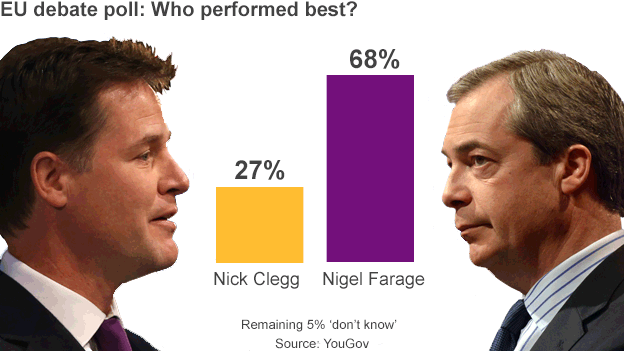
Last night in the United Kingdom, UK Independence Party (UKIP) Leader Nigel Farage and Britain’s Deputy Prime Minister Nick Clegg held their second round of debate on Britain’s role with the European Union. Farage is a strong anti-European Union advocate and a founding member of the UKIP, a Eurosceptic right-wing populist political party. Clegg is the leader of the Liberal Democrats, a progressive and socially liberal political party currently part of the British coalition government. Farage has been pushing for a complete removal of the UK from the EU and the eventual dissolution of the EU, while Clegg is a supporter for continued cooperation with the supranational organization. Early polls indicated that Clegg lost by a 38% margin to Farage, more than he did in the first round.
The key issue in the debates so far has been immigration. Farage wants to limit migration coming through and from the EU, made easier by the creation of the Schengen borderless area which the UK has participated in part with. He blamed immigration and big business for Britain’s current economic woes and accused Members of Parliament such as Clegg for selling Britain out to big business and to Brussels. Clegg countered that Farage was stuck in a 19th century mindset and that isolation from the EU would not solve any of Britain’s problems. Unfortunately for Clegg, 69% of those surveyed agreed Farage.
Public opinion siding with far-right, Eurosceptic ideals is no longer surprising and reflects a broader trend across Europe. In February, Swiss citizens voted in favor for immigration quotas by a slim margin, showing dissatisfaction with the results of the Schengen Area that it is a part of. Just this weekend in France, the centre-left Socialist party suffered heavy losses in municipal elections to the centre-right UMP and the far-right National Front. The National Front, along with the Dutch Party for Freedom, are radical far-right parties that even the UKIP has sought to distance itself from. The ideals behind the Schengen Agreement that led to the construction of open borders for the free movement of goods, peoples, and services, have taken a serious blow thanks to migration. The question Europe faces today is whether to adhere to those ideals or allow them to be systemically chipped away.
Aaron Yang

Aaron is a freshman from Chandler, Arizona and is interested in International Relations and hopes to focus in East Asia. He is also a passionate fan of Doctor Who, Sherlock, House of Cards, Game of Thrones, and Code Geass. If you see him on campus, bring him a boba and you'll get lots of love!
![Migrants at a train station in Dortmund, Germany. [Photo Credit Times of Israel/AP Photo/Martin Meissner]](https://keckjournal.com/wp-content/uploads/2015/09/Germany-Migrants_Horo-4-635x357-50x50.jpg)

